
 This process is also a lot cheaper than landfill or incineration, costing £40 per tonne of waste compared to £80 per tonne in landfill and £140 per tonne incinerated. Also, consider the jobs and additional tax revenue that would be created by developing and running this technology. Construction workers to plan and construct, skilled technicians to keep the plant running at optimum levels, businesses that specialise in fertilisers and energy. It could also attract agro-tourists or become a good place to take students on school trips to learn about how we recycle food.
It is therefore not surprising that Northern Ireland banned separately collected food waste from going to landfill in 2015 and required district councils to provide separate containers for food waste collection. Scotland will be banning food paper and garden waste from going to landfill in 2021. In Wales they have reduced the amount of municipal waste (food, paper and garden waste) that goes to landfill by 88% since 2005.
Can we learn from these councils to make better use of our waste?
Where Does Our Rubbish Go? – Worcester
Where does our rubbish go and could we be putting it to better use?
Currently all of the rubbish we put in our black bins is taken to an incinerator in Hartlebury. This plant (known as EnviRecover, Energy from Waste Plant) then burns the rubbish to generate electricity which goes to the National Grid. According to Severn Waste Services, this generates enough electricity to power 38,500 homes. However, it also creates over two thirds of the county’s Co2 emissions. Is this the most efficient use of our rubbish?
In 2013 a food waste report in Worcester showed that between 25 and 30 percent of the rubbish that is currently sent to the incinerator is food waste. Food waste is, on average, about 70% water so it takes a lot of energy to get it to burn. This means we only get a very small amount of energy back. When you consider the amount of greenhouse gas that has been created by producing, harvesting, transporting and distributing that food it seems such a waste. Surely we should be trying to make the most of what we have and use this fuel as efficiently as possible. With this in mind, many cities have started using anaerobic digestion to recycle their food waste.
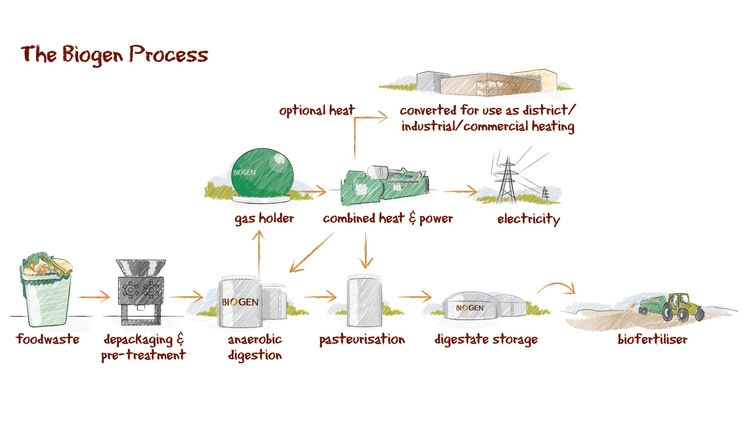
Anaerobic digestion is a process where organic matter is broken down into biogas (roughly 50-70 percent methane, 30-40 percent carbon dioxide), biofertilisers and heat. This process happens in an oxygen free chamber called an anaerobic digester. The gas produced can then be used to create electricity. This process also captures methane which is a major contributor to climate destabilisation
This process is also a lot cheaper than landfill or incineration, costing £40 per tonne of waste compared to £80 per tonne in landfill and £140 per tonne incinerated. Also, consider the jobs and additional tax revenue that would be created by developing and running this technology. Construction workers to plan and construct, skilled technicians to keep the plant running at optimum levels, businesses that specialise in fertilisers and energy. It could also attract agro-tourists or become a good place to take students on school trips to learn about how we recycle food.
It is therefore not surprising that Northern Ireland banned separately collected food waste from going to landfill in 2015 and required district councils to provide separate containers for food waste collection. Scotland will be banning food paper and garden waste from going to landfill in 2021. In Wales they have reduced the amount of municipal waste (food, paper and garden waste) that goes to landfill by 88% since 2005.
Can we learn from these councils to make better use of our waste?